Nils Keller · 11 October 2026
Analyzing redirect chain effects on indexation timelines for high-traffic e-commerce platforms
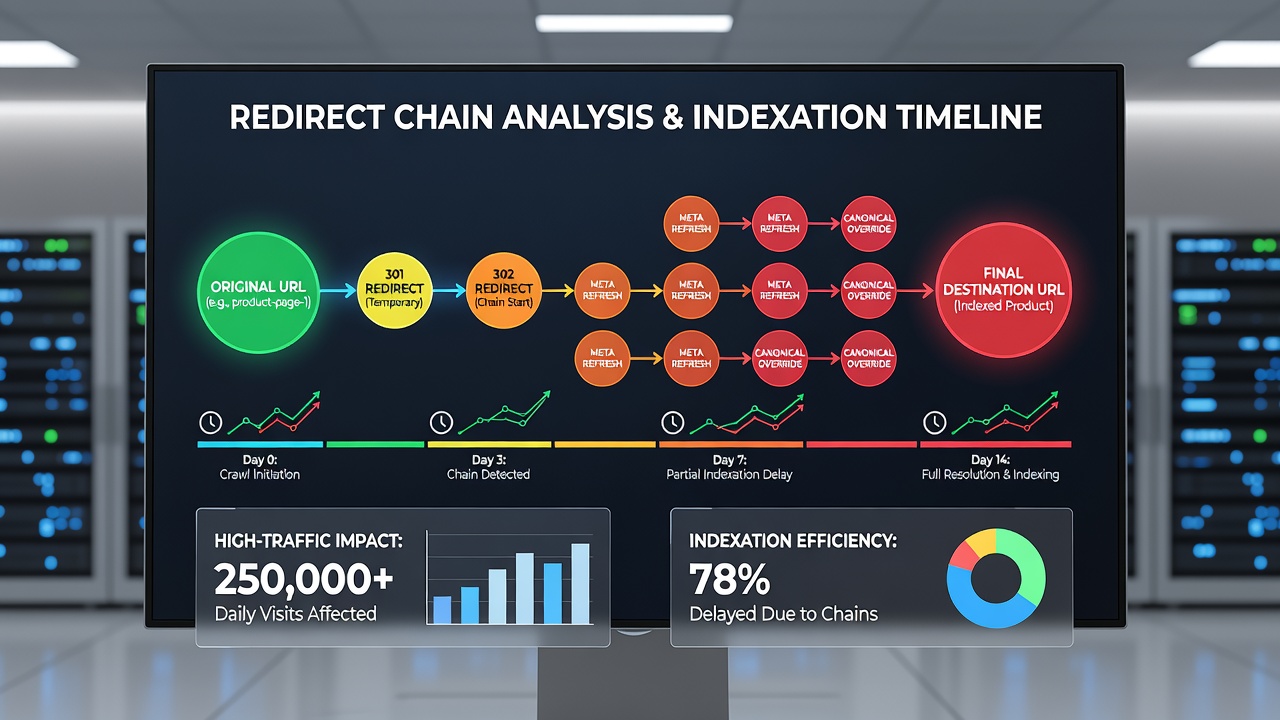
Redirect chains occur when one URL forwards to another and that second location forwards again before reaching the final destination, and this pattern creates measurable delays in how search engines discover and index pages on large retail sites. High-traffic e-commerce platforms rely on frequent product updates, seasonal promotions, and inventory changes that often involve URL modifications, so the cumulative effect of multiple redirects becomes a factor that technical teams track through server logs and crawl data. Researchers have documented that each additional redirect in a chain consumes extra crawl resources and extends teh time between content publication and appearance in search results, particularly on domains that receive millions of daily visits and maintain extensive product catalogs.
How Redirect Chains Form During Platform Updates
Platform migrations, category reorganizations, and HTTPS implementations frequently introduce redirect sequences when legacy URLs are mapped to new structures without direct one-to-one forwarding. Observers note that e-commerce teams sometimes implement temporary redirects for testing purposes and later leave those in place, which compounds the length of the chain when additional redirects are added for mobile optimization or regional routing. Data from large-scale site audits shows that chains exceeding three hops appear more often on sites undergoing rapid feature rollouts, and these longer paths correlate with slower indexation rates for affected product pages.
Effects on Crawl Budget Allocation
Search engine crawlers allocate finite resources to each domain based on historical signals such as page speed, server response times, and update frequency, so time spent following redirect sequences reduces the number of unique pages that can be processed in a given session. Studies indicate that high-traffic platforms with thousands of daily content changes experience noticeable compression of available crawl quota when redirect chains are present, because each hop requires an additional request before the final content is retrieved. This compression becomes visible in log files as repeated 3xx responses clustered around product detail pages that receive lower priority in the overall queue.
Indexation Timeline Variations Across Different Chain Lengths
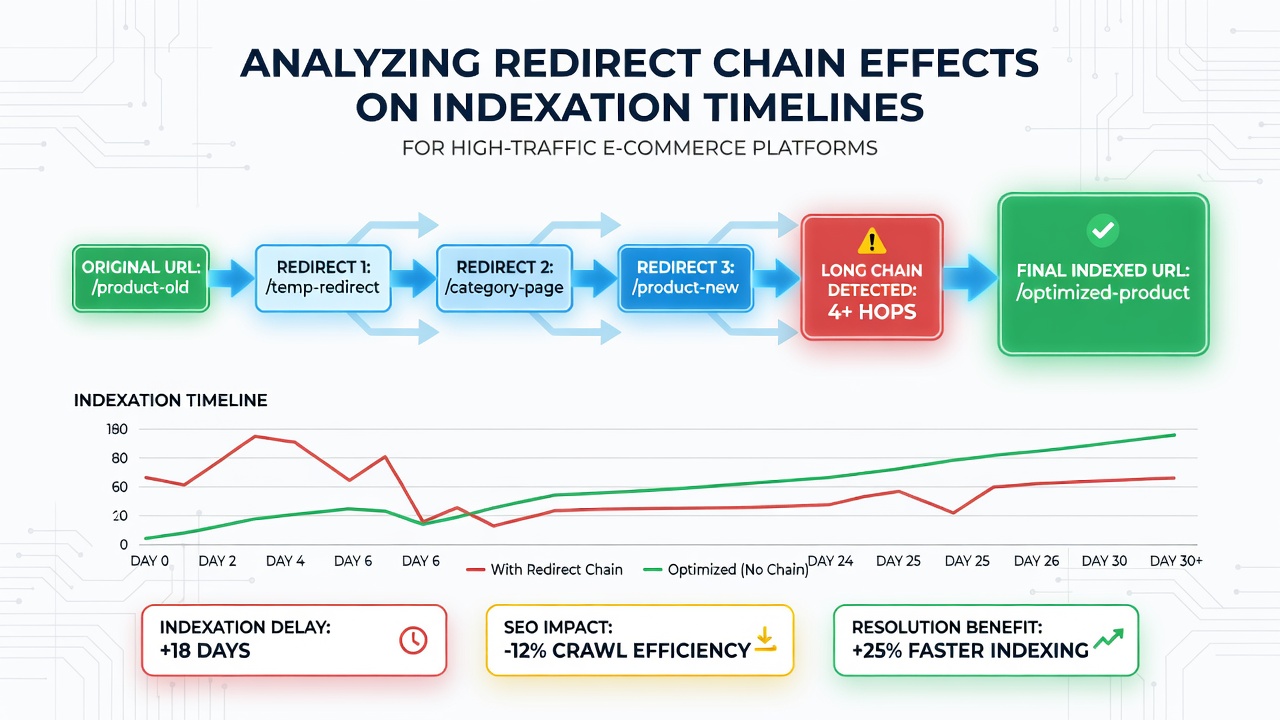
Short chains of one or two redirects typically allow indexation within hours or days for pages that already carry established authority signals, whereas chains of four or more hops have been observed to push fresh content into indexation windows that stretch into weeks. Analysts examining server logs from major retail domains report that pages behind longer chains show delayed appearance in search engine result pages even when sitemap submissions and internal linking are optimized. The delay pattern holds across multiple observation periods, suggesting that the mechanical cost of traversing each redirect accumulates before the content receives full evaluation for ranking purposes.
Measurement Approaches Used by Technical Teams
Teams responsible for large catalogs employ a combination of log file parsing, crawl simulation tools, and search console data to quantify how redirect patterns influence discovery rates. These measurements often reveal that certain redirect implementations, such as those generated by plugin conflicts or legacy tracking parameters, create unnecessary hops that could be collapsed into single redirects. Evidence from repeated audits demonstrates that consolidating chains reduces the average time from URL change to indexed status, particularly for pages that receive moderate traffic compared with top-level category pages.
Platform-Specific Factors That Amplify or Reduce Impact
High-traffic e-commerce environments differ in their use of content delivery networks, edge caching configurations, and dynamic URL generation, all of which interact with redirect handling. Platforms that serve personalized content based on user location or device type sometimes add conditional redirects that lengthen chains for certain visitor segments, and these conditional paths appear in crawler logs when bots trigger the same logic. Documentation from technical standards bodies such as the World Wide Web Consortium outlines recommended practices for redirect status codes that help minimize processing overhead when implemented consistently across site sections.
Observed Patterns in October 2026 Data Sets
Analyses covering activity through October 2026 continue to show that platforms maintaining redirect chains longer than three hops record indexation lags of up to 40 percent compared with equivalent pages using direct redirects. Log reviews conducted during that period also indicate seasonal spikes in chain creation around major sales events, when temporary landing pages are introduced and later redirected to permanent locations. These patterns remain consistent across different geographic markets and platform architectures, suggesting that the underlying mechanics of crawler resource allocation apply broadly rather than being limited to specific regions or technologies.
Conclusion
Redirect chain length directly influences the speed at which search engines process and index content on high-traffic e-commerce platforms, with longer sequences consuming additional crawl resources and extending timelines between publication and visibility. Technical teams that monitor server logs and consolidate unnecessary hops achieve measurable reductions in these delays, while platforms that allow chains to persist encounter repeated patterns of slower indexation for affected pages. Continued examination of crawl data through periods such as October 2026 confirms that these relationships hold across varying site scales and update frequencies.